I am 40 years old and still don’t know how to be myself.
I was reading Eve Ensler’s The Apology because I thought I was ready for it, for the internal reckoning to come crashing down on my head as I let someone else tell me about their ruining in the perpetrator’s voice–and then I could only skim over the lines describing her father’s bliss in a rising panic before sitting up and throwing the book across the bed.
This, and struggling with what to write, had me gasping at my inability to be myself.
Yesterday, I went into town to get a library card. We’ve just moved from Auckland to Nelson, the sunniest part of New Zealand, because of my husband’s work. It was a crazy decision made just three years since moving to the country, as we were beginning to feel the worst effects of immigration fade, finally settling into the rhythm of home, friends, nature trips, the occasional late-night concert. He got the call for an opportunity here, and I guess the rush of detonating our comfort zones for an uncertain but could-be-better future was still fresh in our veins. In less than three weeks, same as last time, we were packed and moved out, with an urgency courtesy of the grip of a second COVID-19 lockdown in Auckland instead of the whims of Filipino immigration officers.
It was the pandemic, really, that convinced us to drive our car down. New Zealand has been handling it pretty well, but it’s not immune to backward thinking and conspiracy theories, and having loved ones in virus-ravaged countries is like getting daily digital dispatches from a future brought about by picking the worst possible choices in a gamebook. In a world like this, how can two people who promised to take care of each other continue to… do just that? Esther Perel acknowledges that this pandemic requires acceptance of the “duality of fear and hope” by drawing on desires from deep within and shedding light on them, divining possible solutions from your pipe dreams and erotic fantasies. All bets are off if we can get sneezed on and die. Go for that tiny house. Leave your sales job to become an apprentice builder in your 30s. Move to the South Island, even if you haven’t yet learned to love winter, not entirely.
I took a week off work to sort the house and my head. Moving is hella stressful–try moving during lockdown to a place you’ve never been. When we told our Airbnb hostess that we were eager to get a place that would allow having a cat, she suggested omitting that requirement, being good tenants for a year, and then maybe broaching the subject. Demoralised after a few viewings we squeezed in while working full time, we finally found one that was perfect and got it. But my brain could no longer cope with the sleepless nights and lockdown-induced frequency of eDMS at work.
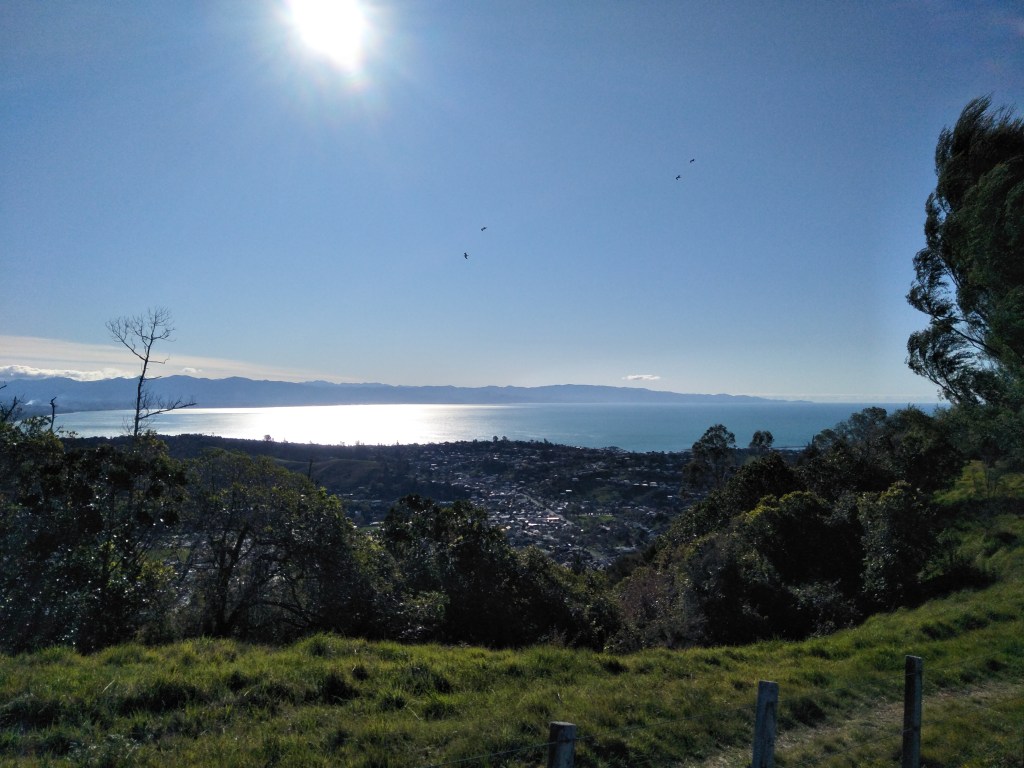
I started the week slowly putting our things in their right places. Finished the whole season of Sharp Objects in two days. Changed address online. I caught a glimpse once of some work-related chat on my phone and immediately gagged on my anxiety; I tamped it down hard, made an espresso of it and gulped it down, forgotten in the dark of my gullet. Climbed the mountain behind our house and marvelled at the city and the sea, gleaming against the silhouette of the Abel Tasman. I took naps in chairs in the sunshine with my feet in house socks. Failed at taking naps on our bed, but no worries. Yesterday, I went into town to get a library card.
People say “g’day” here more than in Auckland. I used to say that to people, but I guess the confluence of cultures there has made it more common to say a complete “good morning/evening”. I g’dayed myself without incident as I walked to the tiny city centre composed of roughly nine blocks. People were nice. The librarian was obviously sizing me up as she took me through the website’s features, but I appreciated that she took the time. When she asked me which design I wanted for my card, I skipped the jandals (“slippers” to my fellow pinoys) and went for the river between mountains, saying, “It looks like home,” which prompted her to say, “Oh, how nice.”
I could sense that she interpreted it as another “home” and so I clarified, “I mean, where I live now, [suburb redacted].”
“Oh.” Flat.
A beat. “Do you mean where I’m originally from?” She didn’t answer, sensing a trap that I hadn’t meant to lay. “Well, I’m from the Philippines.” Slowly, “That’s where I’m from.”
My life since leaving where I was from has been full of these awkward moments. In the first year, I chalked it up to cultural differences. It was in the second year when I realised I felt as if I were 12 years old again, unable to understand the way people talked and were, trying out ways to be. Years of Sesame Street and prestige TV could not prepare me for this. Neither could 15 years of being an adult with a day job, a decent freelance writing career, and two bands that released four albums between them. Coming here, I wasn’t naive enough to think that I could bring these with me whole and intact, but I at least hoped they could serve as talismans throughout what I expected to be a difficult journey.
What talismans have been historically, though, are mere objects. These parts of my identity may as well have been lumps of rock, yet I held them and invoked their feeble power whenever a g’day wasn’t returned, or when I had to contend with mild bullying from the office queen bee. My voice changed. I noticed I found it harder and harder to make it audible, with people completely ignoring what I just said. I thought I’d imagined it at first, but once my husband asked me, annoyed, “Why are you whispering?” and I burst into sobs. And, oh, how many fucks I gave on the smallest of things. I discovered the transience of experiences and people you surround yourself with that tell you who you are. When you are displaced, it’s the icky goo that sticks to you, the dark stowaways in your brain you bring to your destination, while the lighter stuff that gave you joy just melts in your wake.
With my brand new library card, I took out three non-fiction narrative books to get in the spirit of things: George Saunders’ The Brain-Dead Megaphone, Pamela Paul’s My Life with Bob, and Ensler’s book. I read bits of the other two for a taste, and then, feeling very ready, being 40 and all, and having done all this soul searching since coming to this country–my home, despite anything else–I picked up the third and read.
And I recoiled at the goo that was ever so icky!
But there’s time, isn’t there? A brand new city in which to feel isolated again, at least for a while, free to be no one because you forgot how to be yourself. All this time to take with stowaways. There’s no shame if no one’s looking.
 doloresappreciationsociety